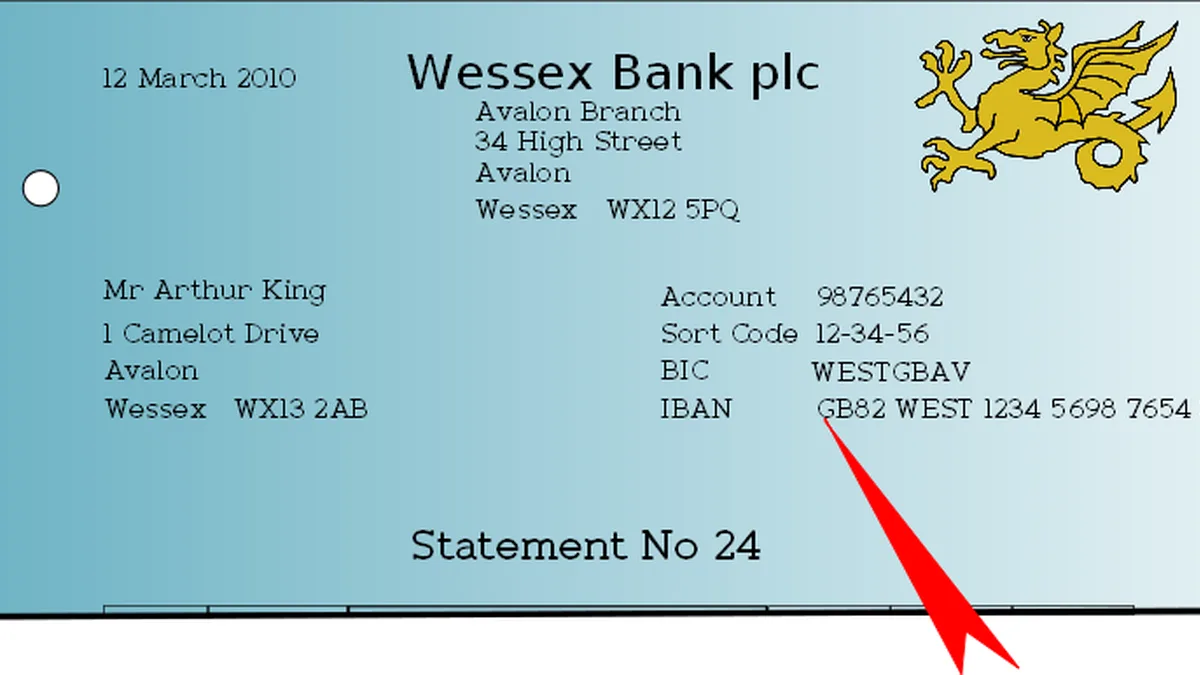
Business Bank Account
| Country of origin | Varies by jurisdiction |
|---|---|
| First created | Varies by jurisdiction |
| Original use | To separate business finances from personal finances for legal and accounting purposes |
| Legal requirement | Varies by jurisdiction |
| Typical required documentation | Business registration, identification, tax number |
| Account holder | Registered business entity |
| Primary use | Processing business income and expenses |
Origin and history
The modern concept of a dedicated business bank account evolved from general commercial banking practices that originated in Europe during the Renaissance, particularly within Italian city-states like Florence and Venice. These early banks began offering specialized services to merchants and trading companies to manage the complexities of commerce separate from personal wealth. The formal separation of business and personal banking became more standardized with the rise of joint-stock companies and corporate law in the 18th and 19th centuries. In common law jurisdictions, the development of the corporate veil legal doctrine further cemented the necessity for distinct financial accounts for registered business entities. The proliferation of small businesses and sole proprietorships in the 20th century drove retail banks to widely offer standardized business account products. Today, the business bank account is a foundational global financial tool, though its specific features and regulatory requirements vary significantly by country and legal system.
What it is for
A business bank account is a financial account used exclusively for the transactions of a commercial or trade entity, separating its finances from the personal funds of its owners or operators. Its primary function is to provide a clear and auditable record of all business income, expenses, and cash flow, which is essential for accurate bookkeeping and financial management. This separation is crucial for processing customer payments via invoices, paying suppliers and employees, and managing business-related taxes and government levies. The account facilitates professional credibility, allowing clients to make payments to the business name rather than to an individual. It also serves as a necessary platform for integrating with other business financial services, such as merchant services for card payments, business loans, and lines of credit. Furthermore, maintaining this distinction is often a legal requirement for incorporated entities to uphold their limited liability status and comply with financial regulations.
Requirements for Business Bank Account
The specific requirements to open a business bank account vary by country, bank, and business structure, but universally demand official documentation that verifies the business's legal existence and the identity of its principals. For a registered entity like a corporation or limited liability company, the primary document is the government-issued certificate of incorporation or registration, proving the business is legally constituted. The business's governing documents, such as articles of incorporation, memorandum of association, or an operating agreement, are typically required to outline ownership and authority. Banks will require personal identification, such as passports or national ID cards, and often proof of personal address, for all significant owners, partners, directors, and authorized signatories. Many jurisdictions mandate that businesses provide a tax identification number or business registration number issued by the national revenue service. Depending on the country's regulations and the bank's policies, proof of the business's physical address, such as a utility bill or lease agreement, and a description of the nature of the business activities may also be necessary.
How to apply for Business Bank Account
The process to apply for a business bank account generally involves a series of sequential steps, beginning with thorough research to compare the fees, features, and accessibility of different banking institutions. The business owner must first gather all required documentation, as outlined in the requirements section, ensuring every document is current and correctly filed with the relevant government agencies. The next step is to complete the bank's official application form, which can often be initiated online but may require an in-person appointment at a branch, especially for corporate entities. During the application, the owner will need to specify the account's authorized signatories and may need to make an initial deposit, the amount of which is set by the bank's policy. The bank will then conduct due diligence, including anti-money laundering (AML) and know-your-customer (KYC) checks, which can take several days to several weeks to complete. Upon approval, the bank will provide the account details, checks, debit cards, and access to online banking platforms, after which the account can be funded and used for all business transactions.
What Business Bank Account costs
The cost structure for a business bank account is typically more complex than for a personal account and can include monthly or annual maintenance fees, transaction fees, and charges for additional services. Monthly maintenance fees are common and can sometimes be waived if a minimum daily balance is maintained or if a certain volume of transactions is processed through the account. Transaction fees may apply for each deposit, withdrawal, check processed, or electronic payment, and these can accumulate quickly for businesses with high activity. Many banks charge fees for cash handling, especially for depositing large volumes of coins and notes, which is a frequent need for retail businesses. Additional costs are often incurred for specialized services like wire transfers, foreign currency transactions, merchant services for payment processing, and issuing official bank checks or drafts. It is critical for an owner-operator to obtain and carefully review the bank's full schedule of fees, as the total cost can vary dramatically based on the business's specific banking patterns and needs.
Pros and cons
A significant pro of a dedicated business bank account is the legal and financial clarity it provides, solidifying the separation between personal and business assets, which is vital for liability protection and professional credibility. It simplifies accounting and tax preparation by centralizing all business transactions, making it easier to track deductible expenses and report income accurately to tax authorities. However, a clear con is the cost, as business accounts invariably carry higher fees and more stringent minimum balance requirements than personal accounts, creating a steady operational expense that can burden new or very small businesses. A common mistake is underestimating these fees or failing to monitor account activity, leading to unexpected charges that erode profit margins. Many sole proprietors who initially use a personal account for business come to regret it when facing a tangled financial audit, a tax investigation, or difficulties in securing a business loan due to commingled funds. Furthermore, some business owners find the application process and ongoing compliance reporting for a business account to be administratively cumbersome compared to the simplicity of personal banking.
Who it suits
A business bank account is essential and legally mandatory for any incorporated business entity, such as a corporation or limited liability company, where the law requires a clear separation of finances to maintain limited liability. It is highly suited for sole proprietors and partnerships, even when not legally required, as it establishes professional practice, simplifies financial management, and builds a banking history for future credit needs. Businesses that process a high volume of transactions, accept payments via credit card or online gateways, or have multiple employees on payroll will find the specialized services of a business account indispensable. It is particularly advantageous for businesses planning to seek financing, as lenders will require clear business financial statements derived from a dedicated account to assess creditworthiness. Conversely, a very small-scale hobbyist or side-gig operator with minimal, infrequent income and no legal registration might initially find the costs and administrative overhead disproportionate, though they should still consider one as their activity grows. Ultimately, any individual engaged in sustained trade or commerce with the intention of profit should treat a business bank account as a fundamental tool for operational integrity and growth.
Latest Business Bank Account news
Latest reporting

OpenAI Partners with America's SBDC for Small Business AI
OpenAI and America's SBDC launched a pilot on September 30, 2026, to train 150 advisors who will deliver in-person AI workshops to at least 1,000...

Meta Expands Muse AI Agent to Small Businesses
Meta has launched Muse for Small Business, a free AI agent that integrates with tools like QuickBooks, Shopify, and Canva to help owners manage...

Lloyds Bank launches Get Paid invoicing tool
Lloyds Bank is launching Get Paid, a free in-app invoicing and payment tracking tool for its business customers later in 2026, aiming to tackle the...

U.S. Bank launches Business Essentials
U.S. Bank has introduced two new business credit cards offering tiered cash back rewards and integrated financial tools, alongside naming Jessica...

AI Chatbot Number Reliability Risks Small Business Customer
A BMW dealership's AI chatbot made a mistaken $27,000 buyback offer.S. Small businesses use AI. Generative models often produce inconsistent numbers...

SBA Proposes Doubling Small Business Size Limits
The U.S. Small Business Administration is proposing to more than double the revenue and employee size limits that define a small business in several