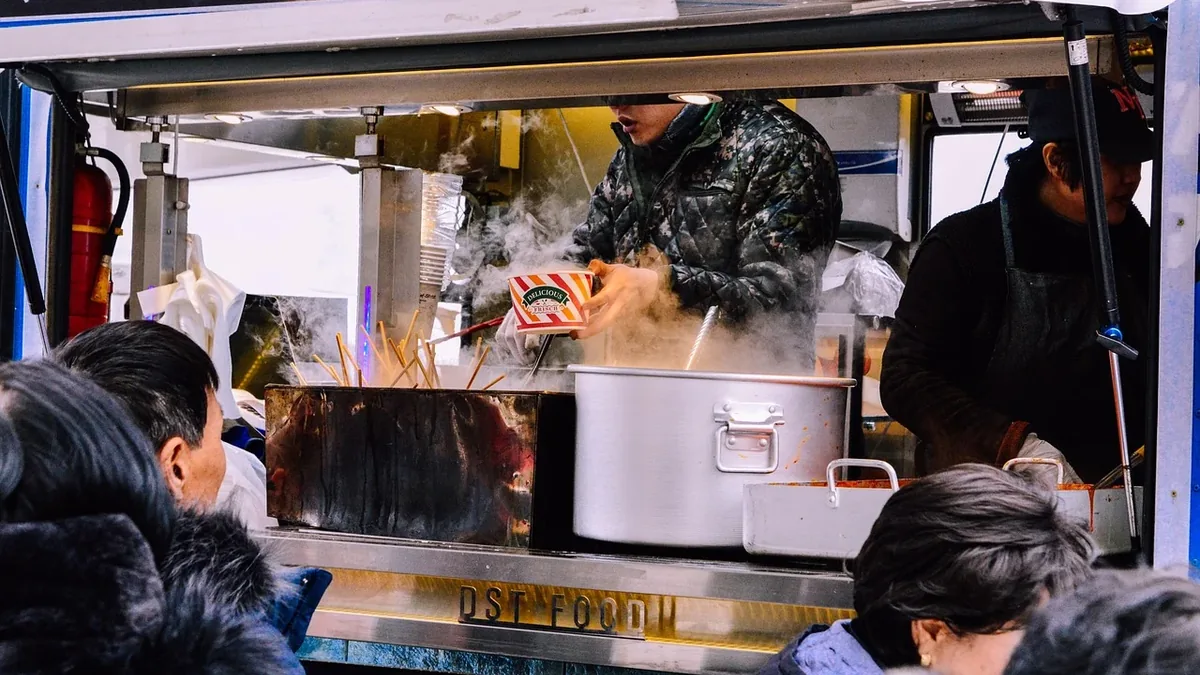
Food Truck
| Country of origin | United States |
|---|---|
| First created | Late 1960s to early 1970s |
| Original use | Mobile food retail from a vehicle |
| Typical vehicle | Modified van, truck, or trailer |
| Primary cuisine | Varies (e.g., single cuisine, fusion) |
| Service model | Counter service at temporary locations |
| Permit type | Varies by jurisdiction (e.g., mobile food vendor license) |
Origin and history
The modern food truck, as a wheeled kitchen selling directly to the public, originated in the United States in the late 19th century. Its earliest direct predecessor was the lunch wagon, which emerged in the 1870s to serve night workers and patrons in areas without fixed restaurants. These were often horse-drawn carts offering simple, hot items like sausages, pies, and coffee to industrial workers. The concept evolved significantly with the introduction of motorized vehicles in the early 20th century, allowing for greater mobility and more elaborate menus. The iconic "roach coach" or catering truck became a common sight at construction sites and factory zones from the mid-20th century onward. The contemporary gourmet food truck movement, which redefined the model with restaurant-quality cuisine, gained critical mass in major U.S. cities like Los Angeles and New York in the first decade of the 2000s.
What it is for
A food truck is a motorized vehicle equipped with cooking, refrigeration, and food preparation facilities, licensed to prepare and sell meals directly to consumers in public spaces. Its primary function is to operate as a mobile restaurant, bringing food service to locations with high foot traffic but potentially low fixed restaurant density. This model serves customers seeking convenient, often quick, meals during lunch hours, at events, or in evening entertainment districts. Food trucks can also specialize in specific, sometimes niche, cuisines that may not be widely available in a given area, acting as a culinary discovery point. They are frequently utilized to provide catering for private events, festivals, and corporate gatherings, offering a self-contained service solution. Furthermore, the food truck serves as a lower-barrier entry point into the food service industry for aspiring chefs and entrepreneurs compared to opening a traditional brick-and-mortar restaurant.
Pros and cons
A significant advantage of operating a food truck is the substantially lower startup and overhead cost compared to a traditional restaurant, as it avoids expenses like commercial rent, extensive dining room furnishings, and high utility bills. The mobility allows operators to test different locations, follow customer demand, and participate in lucrative events, providing flexibility that a fixed location cannot. However, this mobility introduces major challenges, including the daily logistical burden of securing a legal parking spot, the physical strain of driving and setting up the vehicle, and vulnerability to poor weather that can decimate sales. Operators often regret the choice when they underestimate the sheer volume of non-cooking work, including relentless vehicle maintenance, complex permitting navigation, and the constant search for profitable locations. A common mistake is over-investing in customizing a truck before validating the menu concept with customers, leading to financial strain when initial sales are slow. The business is also subject to intense competition in popular areas and can face restrictive or unclear local regulations that limit viable operating zones, creating unpredictable operational hurdles.
Who it suits
This business model suits hands-on individuals with strong culinary skills who also possess mechanical aptitude and a high tolerance for logistical problem-solving, as they must act as both chef and fleet manager. It is well-suited for entrepreneurs with limited capital who wish to enter the food industry, using the truck as a proof-of-concept for a potential future restaurant brand. Individuals who thrive in a fast-paced, physically demanding environment and do not mind an irregular schedule with early mornings and late nights will find the operational rhythm a fit. The model also suits chefs who want to specialize in a single type of cuisine or a limited menu, allowing for focused excellence and efficient kitchen workflow within the constrained space. It is less suitable for those seeking stability or who are averse to administrative tasks, as success requires constant engagement with health department rules, parking regulations, and sales tax reporting. Ultimately, it suits a resilient, adaptable owner-operator who views the truck not just as a kitchen, but as a mobile business asset requiring continuous marketing and location strategy.