Accounting And Bookkeeping Software
Origin and history
Accounting and bookkeeping software originates from the United States, with its development closely tied to the rise of personal computing in the late 20th century. The first dedicated accounting software for businesses emerged in the 1980s, moving bookkeeping from paper ledgers and manual spreadsheets to digital systems. These early programs were largely desktop-based, requiring installation on individual computers and often dealing with data stored on local disks or floppy disks. The evolution accelerated in the 1990s with more sophisticated packages that could handle more complex inventory and payroll functions for small businesses. A major shift occurred in the 2000s with the advent of software-as-a-service (SaaS) models, moving the software online and enabling real-time access from any internet-connected device. This cloud-based era, continuing to the present, has integrated features like automated bank feeds, digital receipt capture, and application programming interfaces (APIs) for connecting to other business tools.
What it is for
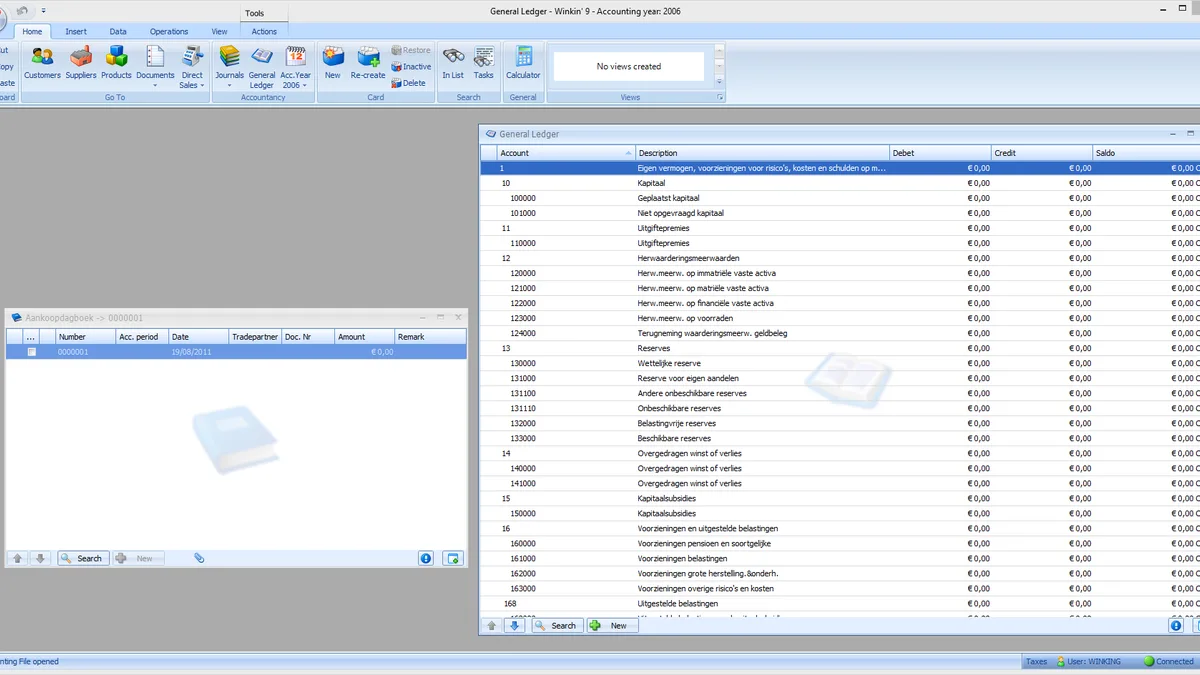
This software is designed to systematically record, store, and process financial transactions for a business or individual. Its core function is to maintain a general ledger, which forms the central repository for all accounting data, ensuring every debit has a corresponding credit. It automates the creation of essential financial statements, namely the profit and loss statement, the balance sheet, and the cash flow statement, which are critical for assessing financial health. The software manages accounts payable and receivable, tracking money owed to suppliers and by customers, and often facilitating invoice creation and payment reminders. It calculates and remits taxes by applying relevant rules to transactional data, though the final liability determination remains a human responsibility. Furthermore, it serves as the primary tool for organizing financial documentation, creating an audit trail that is necessary for compliance, securing financing, or during a tax authority review.
Pros and cons
A primary advantage is the drastic reduction in manual data entry and calculation errors through automation, leading to more accurate financial records and saved time. The software provides real-time visibility into financial performance, allowing owner-operators to make informed decisions based on current cash flow and profitability metrics. It significantly simplifies tax preparation and compliance by organizing income and expense data into reportable categories and generating necessary summaries. A significant con is the initial setup and learning curve, where incorrectly configured chart of accounts or item lists can create persistent reporting problems that are difficult to untangle later. Users often regret choosing software that lacks specific features critical to their industry, such as robust inventory management for retail or project costing for trades, leading to cumbersome workarounds. A common mistake is treating the software as a mere digital filing cabinet without reconciling accounts regularly, which can allow errors or fraudulent transactions to go unnoticed until they become major issues.
Who it suits
This software suits the owner-operator of a small to medium-sized enterprise who must manage their own books but lacks formal accounting training, as it provides a structured framework. It is particularly suited for service-based businesses like consultants, freelancers, and agencies, where invoicing, expense tracking, and straightforward profit reporting are the primary needs. Retail and hospitality businesses with inventory turnover benefit from software that integrates point-of-sale systems to track stock levels and cost of goods sold automatically. It is a necessary tool for any operator in a country with mandatory digital tax reporting or invoicing requirements, as it ensures transactions are recorded in the legally prescribed format. The software is less suitable for very early-stage hobbyist ventures where transaction volume is extremely low and manual tracking suffices, as the cost and complexity may be disproportionate. It is also a poor fit for complex manufacturing or multinational operations without custom enterprise-level solutions, as standard small business packages cannot handle advanced consolidation or multi-currency accounting at scale.
Latest Accounting And Bookkeeping Software news
Latest reporting

Samsung Launches Galaxy S26 FE With AI Tools
Samsung has launched the Galaxy S26 FE, a mid-range smartphone with AI features and seven years of software support, targeting small business owners.

Brazilian Businesses Must Submit EFD-Reinf by Monday to Avoid Fines
Brazilian businesses and accounting firms must ensure they are organized and have accurate information to avoid fines and penalties.

Navigating the Open Market: Strategies for Success in Accounting
For new accounting graduates, entering the job market requires a strategic approach. The accounting sector offers various opportunities, from...