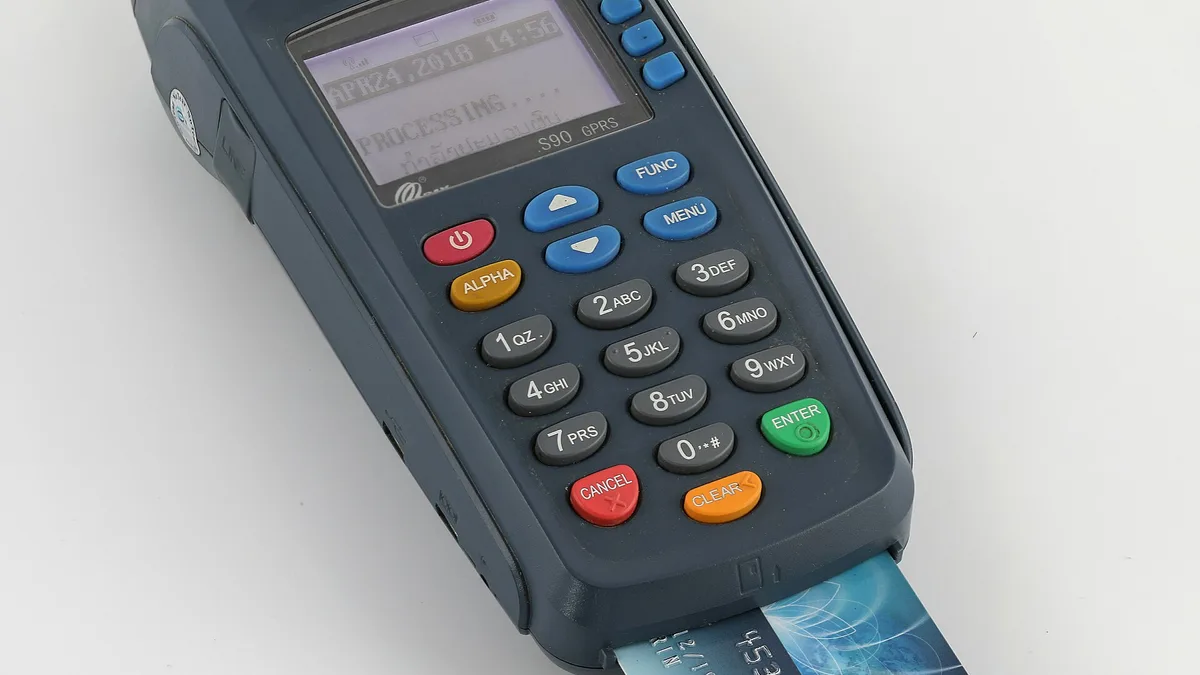
Card Readers And Payment Terminals
| Owner-operator | Merchant or business |
|---|---|
| Governing rule | Payment Card Industry Data Security Standard (PCI DSS) |
| Connection type | Wired, wireless, or mobile |
| Payment methods accepted | Chip, contactless, magnetic stripe |
| Card networks supported | Varies by region and provider |
| Deployment model | Countertop, portable, or mobile |
| Original use | Processing electronic payments for goods and services |
Origin and history
The foundational technology for card readers and payment terminals originated in the United States in the mid-20th century. The first rudimentary electronic data capture for credit cards began development in the late 1960s, following the standardization of the magnetic stripe. Early terminals in the 1970s were bulky, dial-up devices that simply read the magnetic stripe and transmitted data over phone lines to authorize transactions. The 1980s saw the proliferation of these terminals in larger retail establishments, coinciding with the widespread adoption of credit cards by consumers. The introduction of the personal identification number (PIN) and chip card technology, pioneered in Europe in the 1990s, significantly advanced terminal security and functionality. The evolution continued into the 21st century with the advent of wireless connectivity, contactless payments, and integrated point-of-sale systems, transforming the terminal from a simple authorizer to a complex business hub.
What it is for
A card reader or payment terminal is a hardware device used to process electronic payments from debit, credit, gift, and other payment cards at a physical point of sale. Its primary function is to securely capture the cardholder's payment data, either by reading a magnetic stripe, an embedded microchip, or via contactless radio waves. The terminal then encrypts this data and transmits it through a payment gateway to the card-issuing bank or network to request authorization for the transaction. Upon receiving an approval or denial code, the terminal completes the transaction and often produces a receipt for the customer. Modern terminals also facilitate additional functions like tipping, refunds, and transaction reporting for the merchant. Ultimately, these devices enable the immediate transfer of funds from a customer's account to a merchant's account, replacing the need for cash or manual credit card imprinting.
Pros and cons
A significant pro is the substantial increase in sales potential by accepting card payments, as customers tend to spend more and are more likely to complete a purchase when cash is not required. The automation of the process reduces human error in calculation and provides an immediate, digital record of all transactions for easier accounting and inventory management. However, a major con is the cost structure, which typically includes monthly rental or purchase fees, payment gateway fees, and per-transaction processing fees that can erode profit margins on small-ticket sales. Merchants often regret choosing a terminal with a long-term contract that locks them into unfavorable rates or outdated technology as their business grows or new payment methods emerge. The common mistake is focusing solely on the hardware cost without fully understanding the complex interchange fees, assessment fees, and processor markups that constitute the total cost of ownership. Furthermore, technical issues like connectivity failures or software glitches can halt sales entirely, creating customer frustration and lost revenue during critical business hours.
Who it suits
This tool suits any business owner-operator conducting in-person sales who seeks to improve customer convenience and expand their potential customer base beyond those carrying cash. It is particularly critical for retail stores, restaurants, and service providers where transaction amounts are variable and impulse purchases are common. Mobile businesses, such as tradespeople, market vendors, or food trucks, benefit greatly from compact, battery-powered wireless terminals that can process payments anywhere with cellular data. Owner-operators in regions with high card penetration rates find terminals nearly mandatory to remain competitive and meet standard customer expectations for payment choice. It also suits businesses aiming to enhance their professional image and operational efficiency through integrated point-of-sale systems that combine payment processing with inventory and sales tracking. The specific rule in the owner-operator's country governing the next step, such as mandatory strong customer authentication or liability shift rules for chip-and-PIN, makes selecting a compliant, certified terminal a legal and financial necessity.
Latest Card Readers And Payment Terminals news
Latest reporting
Lloyds Bank launches Get Paid invoicing tool
Lloyds Bank is launching Get Paid, a free in-app invoicing and payment tracking tool for its business customers later in 2026, aiming to tackle the...

Federal Reserve Proposes GENIUS Act Stablecoin Rules
The Federal Reserve issued two proposals under the GENIUS Act to regulate payment stablecoins. The rules would require full asset backing for tokens...

SolvaPay Builds Payments for AI Agents
FinTech firm SolvaPay is developing payment infrastructure for AI agents, addressing challenges like machine-readable payments and usage-based...
Credit Card Installment Use Jumps 13 Points, Doubles BNPL
A PYMNTS Intelligence report finds credit card installment plan usage surged to 36% of consumers by March 2026, more than double the rate for...
Bottomline Launches Global Pay Connect SaaS Platform
Bottomline has launched a new SaaS platform, Global Pay Connect, aimed at helping financial institutions modernize payment systems and integrate...
Visa Launches Working Capital Program for Stablecoin Card
Visa has introduced a program using its payment network data and on-chain technology to help lenders provide working capital to stablecoin-linked card