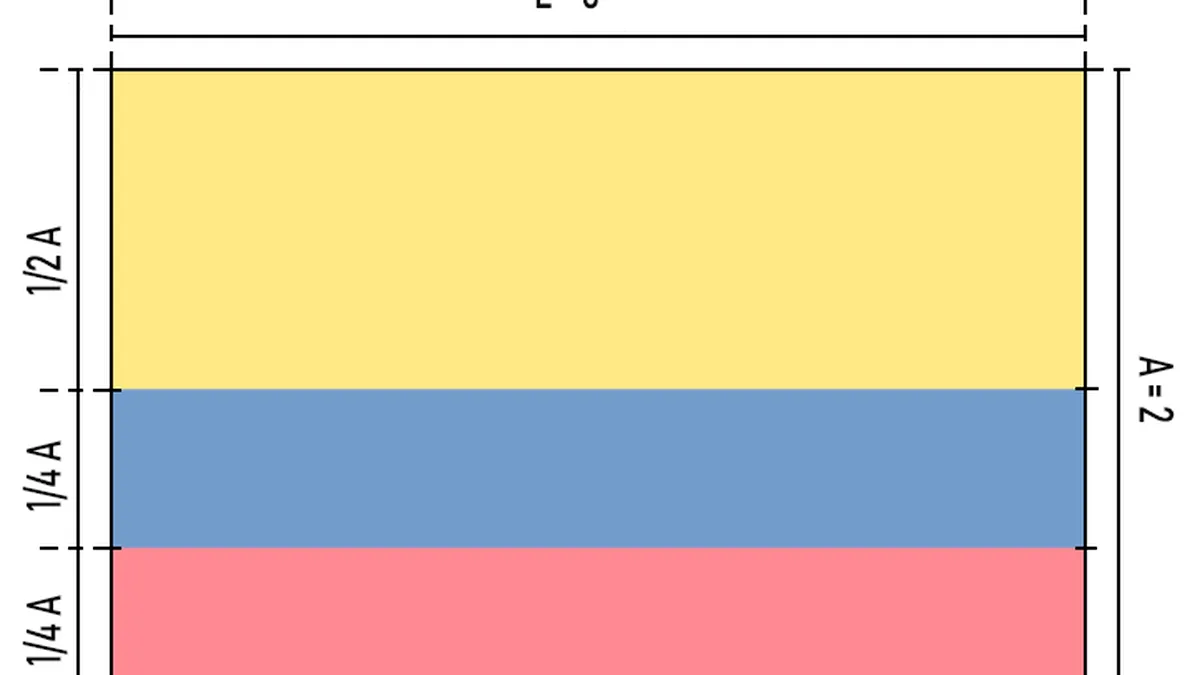
Colombia
| Capital | Bogotá |
|---|---|
| Official language | Spanish |
| Currency | Colombian peso (COP) |
| Government | Unitary presidential republic |
| Legal system | Civil law |
| Driving side | Right |
| Time zone | Colombia Time (COT, UTC-5) |
| Calling code | +57 |
Overview
Colombia is a unitary constitutional republic located in northwestern South America. Its government operates under a framework established by the Political Constitution of 1991, which defines it as a social state under the rule of law. The state is organized into three separate branches: executive, legislative, and judicial, with a system of checks and balances. The President serves as both head of state and head of government, elected by popular vote for a single four-year term. The country's legal system is based on civil law, heavily influenced by Spanish and French legal traditions. Territorial administration is divided into 32 departments and a capital district, each with a degree of local governance.
History
The territory of modern Colombia was originally inhabited by numerous indigenous peoples, including the Muisca, Quimbaya, and Tairona. Spanish colonization began in the early 16th century, establishing the Viceroyalty of New Granada, which also included territories of present-day Ecuador, Panama, and Venezuela. Independence from Spain was achieved in the early 19th century after a prolonged campaign led by figures like Simón Bolívar, culminating in the creation of Gran Colombia in 1819. Following the dissolution of Gran Colombia in 1831, the Republic of New Granada was formed, which later became the Granadine Confederation, the United States of Colombia, and finally the Republic of Colombia in 1886. The 20th century was marked by a period known as La Violencia in the mid-1900s and subsequent internal armed conflict involving guerrilla groups, paramilitaries, and state forces. The current constitution, enacted in 1991, replaced the 1886 charter in an effort to modernize the state and address profound social and political challenges.
How it works today
Sovereignty resides exclusively in the people, who exercise it directly through votes for public office or through the established branches of government. The executive branch is led by the President, who appoints a cabinet and possesses significant administrative and regulatory authority. The bicameral Congress, consisting of the Senate and the House of Representatives, holds legislative power and is responsible for lawmaking and political control. The judicial branch is headed by the Supreme Court of Justice, the Constitutional Court, the Council of State, and the Superior Council of the Judiciary, each with distinct jurisdictions. A key feature is the active role of the Constitutional Court, which guards the integrity of the 1991 constitution and handles tutela actions, a rapid legal mechanism for individuals to claim protection of their fundamental constitutional rights. Local governance is exercised by elected governors, mayors, and departmental assemblies, with certain resources and responsibilities decentralized from the national government.
Pros and cons
A significant advantage of the Colombian system is the robust constitutional protection of individual rights, particularly through the accessible tutela mechanism, which allows citizens to seek immediate judicial protection. The clear single-term limit for the presidency prevents prolonged personalist rule and encourages regular political renewal. However, a major con is the persistent challenge of clientelism and corruption within political institutions, which can distort public policy and undermine the equitable delivery of state services. The system's complexity and sometimes slow bureaucratic processes can frustrate efficient governance and citizen engagement. Many citizens and businesses regret the inconsistent application of regulations across different regions, leading to legal uncertainty and operational hurdles. A common mistake made by observers is underestimating the deep regional disparities in state presence and capacity, which means the experience of governance varies drastically between urban centers and remote rural areas.
Who it suits
This governmental structure suits a polity with a deep-seated desire for legal recourse and rights protection, as evidenced by the widespread use of the constitutional tutela. It suits a country requiring a strong central executive to manage complex internal challenges while allowing for gradual regional administrative differentiation. The system is suited to a society that has explicitly rejected presidential re-election as a safeguard against authoritarian drift, valuing periodic leadership change. It accommodates a politically engaged citizenry that participates actively in local elections for mayors and governors, which are often highly contested. The framework suits a nation where the judiciary is expected to play an activist role in shaping social policy and resolving fundamental rights disputes. It is a system for a country in a continuous process of negotiating peace and integration with former armed actors, where legal and constitutional instruments are primary tools for that process.