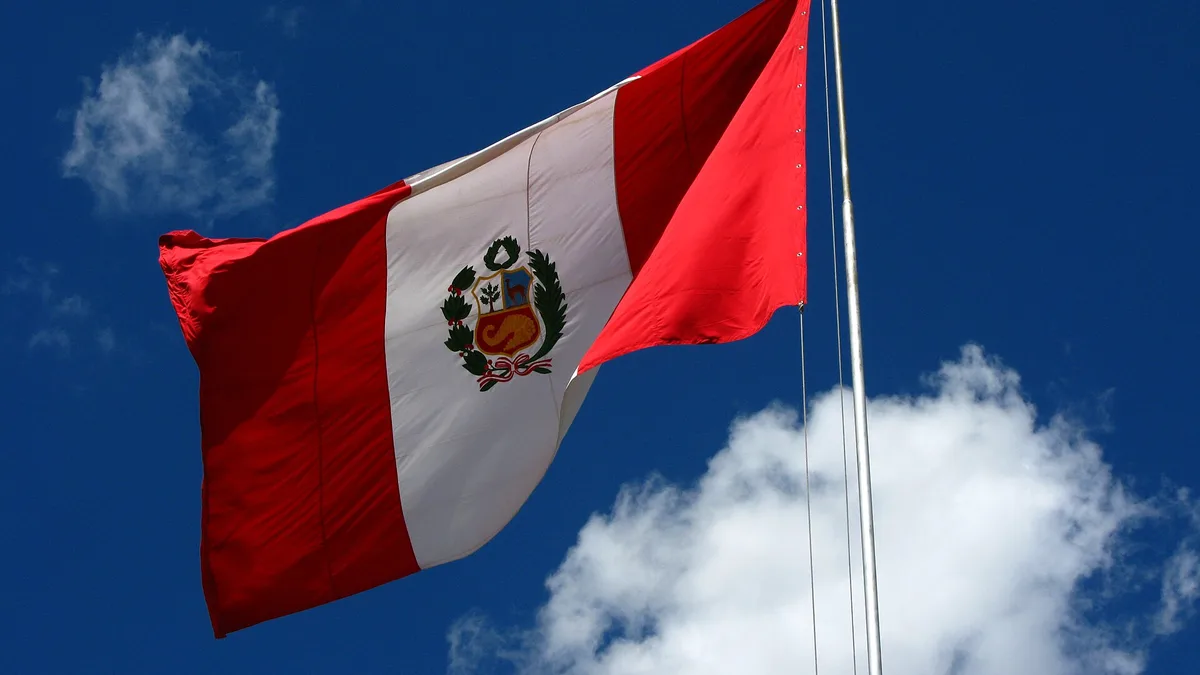
Peru
| Capital | Lima |
|---|---|
| Official languages | Spanish, Quechua, Aymara |
| Currency | Peruvian Sol (PEN) |
| Government | Unitary presidential republic |
| Time zone | PET (UTC-5) |
| Driving side | Right |
| Calling code | +51 |
Overview
Peru is a sovereign nation located on the western coast of South America, bordered by Ecuador, Colombia, Brazil, Bolivia, Chile, and the Pacific Ocean. Its territory encompasses a highly diverse set of geographic regions, including a narrow coastal desert, the high-altitude Andes mountains, and a large portion of the Amazon rainforest basin. The country operates as a unitary presidential representative democratic republic, with its capital and largest city being Lima. The legal framework of the state is governed by the Political Constitution of Peru, promulgated in 1993, which establishes the separation of powers into executive, legislative, and judicial branches. The President serves as both head of state and head of government, leading the executive branch, while the Congress of the Republic holds legislative power. The governance structure also includes regional and local governments, though the state maintains a unitary rather than federal model, with significant central authority retained by the national government in Lima.
History
The territory of modern Peru was the cradle of several advanced pre-Columbian civilizations, most notably the Inca Empire, which established its administrative center in Cusco during the 15th century. Spanish conquistadors led by Francisco Pizarro arrived in the early 16th century, capturing the Inca emperor and establishing the Viceroyalty of Peru, which became a major source of silver and a pivotal administrative hub for Spanish South America. Peru declared its independence from Spain in 1821, a process solidified after the battles of Junín and Ayacucho in 1824, with Simón Bolívar and José de San Martín playing key roles in the liberation campaign. The 19th and early 20th centuries were marked by political instability, internal conflicts, and a series of military and civilian governments, alongside the loss of territory following the War of the Pacific in the late 19th century. The latter half of the 20th century saw periods of military rule, the establishment of democratic elections, and the emergence of violent internal conflicts with groups like the Shining Path. The current constitutional framework dates from 1993, implemented under the presidency of Alberto Fujimori, which followed a period of economic crisis and political upheaval.
How it works today
The Peruvian political system functions under the 1993 Constitution, which outlines a strong presidential model where the president is directly elected for a five-year term and cannot seek immediate re-election. The unicameral Congress, consisting of 130 members, is also elected for a five-year term and holds the power to enact laws, approve treaties, and oversee the executive branch through mechanisms like interpellation and censure. The judiciary is headed by the Supreme Court of Justice, with a separate Constitutional Tribunal responsible for ruling on the constitutionality of laws and protecting fundamental rights. Regional governments, established in each of the country's 25 regions, have elected presidents and councils, but their autonomy and fiscal resources are often limited by central government oversight and funding. Key institutions like the National Jury of Elections, the National Office of Electoral Processes, and the National Registry of Identification and Civil Status manage electoral and civic registration processes to ensure democratic continuity. The legal system is based on civil law, and the country maintains a mixed economic system with significant private sector activity alongside state involvement in strategic sectors like mining and energy.
Pros and cons
A significant advantage of Peru's system is its constitutional stability over the last three decades, providing a consistent legal framework for governance and economic activity, which has contributed to sustained periods of strong economic growth driven largely by mineral exports. The direct election of both executive and legislative branches provides clear democratic mandates, while the prohibition on immediate presidential re-election is designed to prevent prolonged personalist rule. Conversely, a major drawback is the frequent and intense conflict between the executive and legislative powers, often leading to political paralysis, premature dissolution of congress, and impeachment proceedings that detract from long-term policy implementation. The system is also criticized for weak political parties, which tend to be personalist vehicles with low ideological consistency, resulting in fragmented legislatures and unstable coalition governments. A common mistake is the centralization of power and decision-making in Lima, which marginalizes regional and local governments and fuels social discontent, particularly in resource-rich areas that feel excluded from economic benefits. Many citizens and analysts regret the system's vulnerability to corruption scandals at high levels, which have repeatedly undermined public trust in all branches of government and state institutions.
Who it suits
This governance model suits a politically engaged citizenry that values direct electoral choice for the presidency and congress, even if it leads to periodic confrontational politics. It is a system that has functioned best for economic actors and investors who prioritize a consistent constitutional framework for business and trade, particularly in the extractive industries which dominate the export economy. The structure suits a unitary state model where strong central coordination is deemed necessary for national integration across difficult geography, despite ongoing tensions with regional aspirations for greater autonomy. It appeals to those who support a clear, albeit constrained, democratic process with regular elections and formal mechanisms for presidential accountability, such as congressional oversight and impeachment. The system is less suited for populations seeking deep decentralization, robust multiparty representation based on clear ideologies, or rapid, consensus-driven policy-making on complex social issues. It is also challenging for those who prioritize long-term institutional strengthening over short-term political maneuvering, as the frequent clashes between branches of government often weaken state capacity.